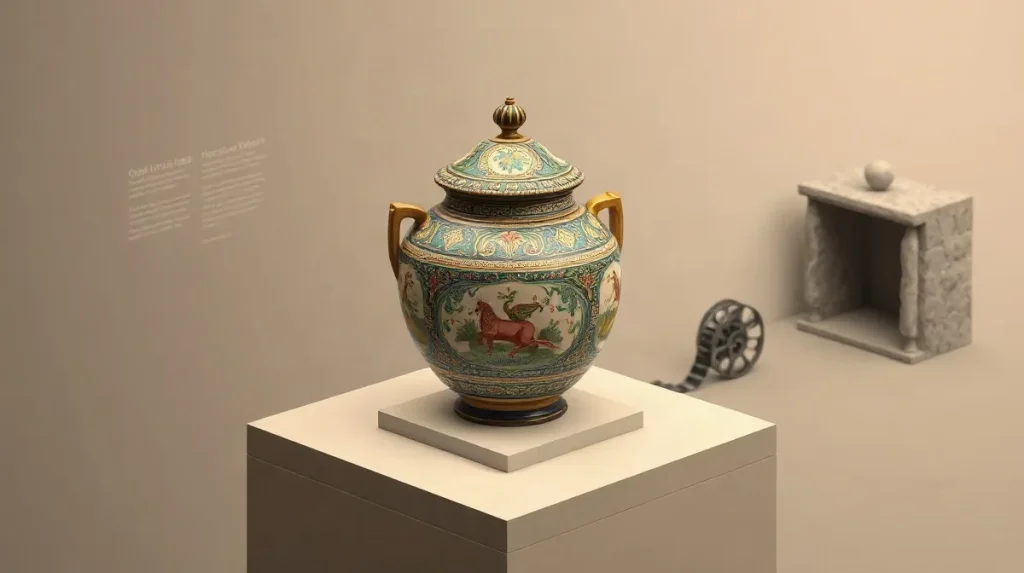
The University of Amsterdam’s Allard Pierson museum has returned a third-century BC Sicilian vase to authorities in Sicily after provenance research found its claimed history of private ownership was false. The Centuripe pyxis was bought at the Tefaf art fair in Maastricht in 1997; Italian police sought its return in 2017. The museum agreed to hand it back, citing a moral responsibility despite not being legally bound by the relevant UNESCO convention at the time.
A sale history challenged by new evidence
The lidded ceramic vessel was sold to the museum by a Swiss art dealer, who said it had been in private hands since before 1970. That date mattered because the UNESCO convention adopted that year addresses illicit trade in cultural property. The museum’s research later found the dealer’s account did not hold up.
A roll of film belonging to a local photographer provided a key clue. One image showed the vase; another showed a wedding group in Centuripe in 1976. The photographs linked the object to the Sicilian town and contradicted the account that it had been privately owned before 1970. Italian authorities made their restitution request in 2017 after the film was discovered.
From a tomb near Centuripe
The vase is thought to have come from a rock-cut tomb near Centuripe, a Sicilian trade centre allied with Rome. Tombs in the area were raided by grave robbers during the 1970s, placing the object’s likely removal within a period of documented looting described in the source material.
Its painted decoration depicts ancient gods, including Apollo, looking on at a wedding scene. The object’s identification as a Centuripe pyxis connects its artistic subject matter to a specific place of origin, while the photographic evidence helped support the case for return. It is due to be displayed at the Centuripe Regional Archaeological Museum.
Law and the museum’s moral decision
The UNESCO convention was ratified by the Netherlands in 2009, so the Allard Pierson was not legally bound by it in this case. That distinction separates the museum’s legal position from its decision to return the vase: it accepted that the provenance was problematic and chose to act on the evidence.
Rogier Kalkers, the Allard Pierson’s head of provenance research, described a change in approach: rather than wait for countries of origin to request objects, the museum contacts them when its research raises concerns. The return thus followed both a specific claim by Italian authorities and the museum’s own examination of the vase’s history.
Return as the start of cooperation
Kalkers said the museum does not regard the transfer as simply a loss of a collection object. He framed it as an opening for closer work between institutions in the Netherlands and Sicily, including further provenance research and technical study of the pigments and clays used in this type of ceramic.
The proposed collaboration also includes loans between institutions in both directions. With the vase set to go on display in Centuripe, the return shifts the focus from ownership to shared stewardship and research. The museum’s position is that losing title to one object can create a basis for wider cultural and scholarly exchange.
A wider turn toward provenance
The vase’s return was reported alongside the culture minister’s announcement that a Picasso bust would be returned to the heir of Jewish dealer Alfred Flechtheim. The two cases involve different objects and histories, but both reflect closer attention by museums to how works entered their collections.
The report also calls for a new panel to advise the minister on repatriations and for a provenance research centre. Those proposals point to a possible institutional response beyond individual returns: more structured advice and research on claims. The Centuripe pyxis offers a concrete example of how archival material can unsettle a sale history and lead a museum to reconsider its responsibilities.
Takeaway: The Allard Pierson returned the vase after film evidence and provenance research undermined its pre-1970 ownership story, turning a 2017 claim into a basis for renewed Dutch-Sicilian cooperation.
