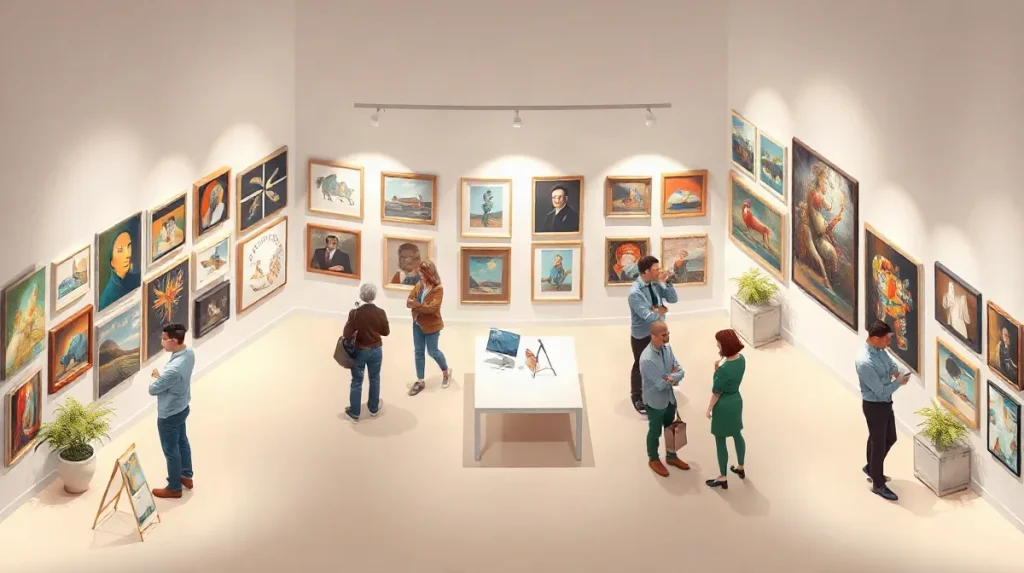
Understanding the distinct roles of a gallery versus a dealer is essential for anyone engaged with the contemporary art world, particularly within the vibrant sphere of Russian and Eastern European art. While both serve as critical intermediaries between artists and collectors, their functions, relationships, and approaches often differ in key ways. Navigating the role of a gallery versus a dealer illuminates how artworks are curated, promoted, and ultimately brought to market.
Galleries typically operate as curated spaces dedicated to showcasing a roster of artists, fostering ongoing relationships and supporting artistic development. Dealers, on the other hand, often act more independently, focusing on the buying and selling of art with an emphasis on market dynamics and collector interests. By exploring these distinctions, collectors, artists, and enthusiasts can better appreciate the nuanced ecosystem that sustains the contemporary art scene in Russia, Eastern Europe, and beyond.
| Criteria | Art Dealer | Gallery |
|---|---|---|
| Primary Function | Buying and reselling art, market pricing advice | Exhibiting and promoting artists' works |
| Commission Rate | 50%-60% of sale price | 40%-50% of sale price |
| Market Influence | Secondary market pricing and trends | Primary market visibility and press |
| Artist Relationship | Often non-exclusive, negotiable contracts | Usually exclusive representation agreements |
| Liquidity | May purchase works outright for quick sales | Rarely buys artworks directly |
| Exhibition Role | Limited or no exhibition space | Curates shows and participates in fairs |
- 50%-60% Typical dealer commission rate on art sales
- 40%-50% Typical gallery commission rate on art sales
- $200,000 Price of a large-scale 2026 work by Ilya Kabakov
- 2026 Current year reflecting latest market conditions
What are the primary roles of an art dealer compared to a gallery?
Dealer Functions
Art dealers primarily engage in purchasing and reselling artworks while offering expert advice on pricing and market trends. They often earn commissions ranging from 50% to 60% of the sale price, a substantial portion that reflects their role in navigating supply and demand dynamics. Dealers work closely with collectors and investors, providing personalized market guidance that can influence the secondary market value of artworks. For instance, a dealer might strategically time a sale or target specific buyers to enhance an artist’s market presence. Their approach is often transactional and investment-focused, emphasizing the commercial potential of pieces rather than their exhibition context.
Gallery Functions
Galleries concentrate on exhibiting and promoting artists’ works to the public and collectors, managing relationships through artist representation agreements. Galleries curate exhibitions, organize opening events, and foster public engagement, aiming to build an artist’s reputation and audience over time. Unlike dealers, galleries typically take commissions closer to 40% to 50%, balancing sales with educational and cultural objectives. For example, a contemporary gallery in New York may schedule quarterly group exhibitions and manage sales records to enhance an artist’s visibility. Their role encompasses both commercial and curatorial responsibilities, providing a platform for artists to connect with collectors and the broader art community.
- Dealer commission rates: 50%-60% of sale price
- Gallery commission rates: approximately 40%-50%
- Gallery activities: curating exhibitions, managing public events, artist representation
- Dealer activities: advising on pricing, influencing secondary market timing
How do commission structures differ between dealers and galleries in 2026?
Dealer Commission Rates
In 2026, art dealers typically charge commissions ranging from 50% to 60% of the final sale price, reflecting their assumption of market risk and expertise in pricing. This higher commission scale compensates dealers for upfront costs such as purchasing inventory and navigating fluctuating market demands. For instance, dealers specializing in Eastern European avant-garde art often negotiate flexible commission rates that can adjust based on the artist’s reputation and sales volume, allowing commissions to vary within or slightly outside this range depending on contractual arrangements.
Gallery Commission Rates
Galleries generally take a commission of 40% to 50% on art sales, balancing their ongoing expenses for exhibition space, marketing, and artist promotion. In Russian contemporary art galleries like Moscow’s Winzavod, commission rates tend to hover around 50%, influenced by the high operational costs associated with maintaining large gallery spaces and organizing regular exhibitions. Factors such as exhibition duration, promotional campaigns, and the prestige of the gallery location also affect this rate.
- Dealer commissions: 50%-60% of sale price
- Gallery commissions: 40%-50% of sale price
- Winzavod gallery commission: approximately 50%
- Dealer commissions for Eastern European avant-garde art: negotiable based on artist reputation and sales volume
What factors influence art pricing and market trends handled by dealers and galleries?
Pricing Influences
The pricing of artworks handled by dealers and galleries is primarily influenced by the artist’s reputation and historical sales data, with established names commanding prices that can reach hundreds of thousands of dollars per piece. For example, a large-scale mixed-media work created in 2026 by Russian artist Ilya Kabakov can exceed $200,000 on the primary market. The medium and size of the work also play crucial roles; paintings generally fetch higher prices than prints, and larger canvases command premiums over smaller formats. Galleries often set prices based on these factors combined with provenance, while dealers consider auction results and private sales to adjust valuations dynamically.
Market Trend Monitoring
Dealers and galleries track market trends differently to optimize pricing strategies and maintain demand. Galleries leverage their exhibition schedules and the critical acclaim garnered through reviews to enhance visibility and collector interest, thus influencing price fluctuations. Meanwhile, dealers closely analyze secondary market auction outcomes, such as sales at Sotheby’s or Phillips, to identify shifts in collector preferences and emerging trends. Both rely on metrics like the percentage increase in auction hammer prices year-over-year or the frequency of artist appearances in top-tier exhibitions to anticipate market movements.
- Artist reputation and sales history enabling prices up to $200,000+ per piece (e.g., Ilya Kabakov, 2026)
- Medium and size as pricing multipliers, with large-scale mixed-media works commanding premiums
- Gallery-driven demand through curated exhibitions and critical reviews
- Dealer analysis of secondary auction results to track price trends and collector interest
- Standard dealer commissions ranging from 50% to 60% impacting final sale pricing
When might the gallery model be less effective than working with a dealer?
Limitations of Galleries
Galleries may be less effective than dealers when exclusivity agreements restrict artists from independently selling their work or collaborating with multiple dealers. Such agreements commonly require artists to forgo sales outside the gallery, limiting flexibility and potentially delaying opportunities. Additionally, galleries typically do not purchase artworks outright, which can impede artists’ access to immediate funds. For instance, many galleries in Moscow charge commission rates of 40%-60% but rarely offer advances or direct purchases, leaving artists reliant on the timing of sales. In emerging Eastern European markets, galleries often face significant overhead costs—rent in Kyiv’s central art districts can exceed $2,000 per month—that reduce promotional budgets and limit reach, especially for lesser-known artists. This financial pressure may reduce galleries’ ability to participate in international art fairs, where presence can cost upwards of $15,000 per booth, thereby narrowing market exposure.
Advantages of Dealers
Dealers often provide more effective support when rapid liquidity and personalized market guidance are critical. Dealers typically buy works outright, offering artists immediate payment, which can be vital for cash flow, particularly in volatile markets. With commissions commonly ranging from 50% to 60% on resale, dealers invest in both acquisition and sales, facilitating faster turnover. Furthermore, dealers excel in navigating secondary markets and international fairs where galleries might lack presence; for example, dealers active in the Prague art scene often leverage contacts in Berlin and Vienna fairs, which can cost $10,000–$20,000 in participation fees. Dealers also tailor pricing strategies based on real-time market trends, providing artists with strategic advice that galleries with fixed exhibition schedules may not offer.
- Exclusivity agreements in galleries often restrict artist sales outside the gallery
- Gallery overhead in Eastern Europe can exceed $2,000 monthly, impacting promotion
- International fair booth costs for galleries can surpass $15,000, limiting participation
- Dealers typically take 50%-60% commission but provide upfront purchase and liquidity
- Dealers access secondary markets and international fairs costing between $10,000–$20,000
How do dealers and galleries contribute differently to an artist’s career growth?
Gallery Contributions
Galleries contribute to an artist’s career growth primarily by establishing sustained visibility and credibility through curated exhibitions and media engagement. For example, a gallery might organize a solo show lasting 4 to 6 weeks, supplemented by inclusion in group exhibitions twice annually, which can significantly raise an artist’s profile within regional art circles. Galleries also actively promote artists by securing press coverage in influential art publications, a process that can increase sales prices by 10-20% over time. Participation in major art fairs such as Art Moscow or Viennafair, where booths typically cost between $30,000 and $50,000, is facilitated by galleries to amplify regional and international recognition. These events are critical for building a collector base and attracting institutional interest, positioning artists for long-term career advancement.
Dealer Contributions
Dealers enhance an artist’s market exposure by strategically placing works in private collections and advising on international sales channels, often focusing on the secondary market. Operating with commission rates commonly ranging from 50% to 60%, dealers negotiate sales that can reach upwards of $100,000 per piece for emerging Eastern European artists. They assist artists in navigating auction houses like Sotheby’s and Phillips, where successful lots can set benchmark prices that elevate an artist’s market stature globally. Dealers also tailor sales strategies to collectors’ preferences across markets such as Western Europe and the United States, expanding an artist’s reach beyond gallery circuits. Their role in managing pricing trends and timing sales contributes to building a sustained secondary market presence essential for career longevity.
- Gallery exhibition durations: 4–6 weeks for solo shows
- Gallery booth costs at major fairs: $30,000–$50,000
- Dealer commission rates: 50%–60% of sale price
- Artwork sale prices through dealers: up to $100,000+
- Key auction houses for dealer placements: Sotheby’s, Phillips
Frequently asked questions
What percentage commission do art dealers usually take in 2026?
Do galleries sell art at fixed prices or negotiate with collectors?
Can an artist work with both a gallery and a dealer simultaneously?
How do dealers influence the secondary art market?
Key takeaways
- Dealers command higher commissions (50%-60%) due to market risk and pricing expertise.
- Galleries focus on exhibiting and artist promotion, typically charging 40%-50% commission.
- Pricing depends on artist reputation, medium, size, and market demand.
- Dealers provide liquidity and market guidance; galleries build long-term visibility.
- Contract exclusivity may limit artists from simultaneously working with both.
Sources
- zenmuseum.com — “The Art Dealer's Role: An Artist's Expanded Personal Take”
- Naturalist Gallery of Contemporary Art — “Navigating the Art Market: Art Pricing and Commission”
- eb5investors.com — “What is the role of a RIA versus a broker-dealer in EB-5? – EB5Investors.com”
- pcarwise.com — “Independent Repair Shop versus Porsche Dealer Service”
Topic guide: Artists: The Complete Guide