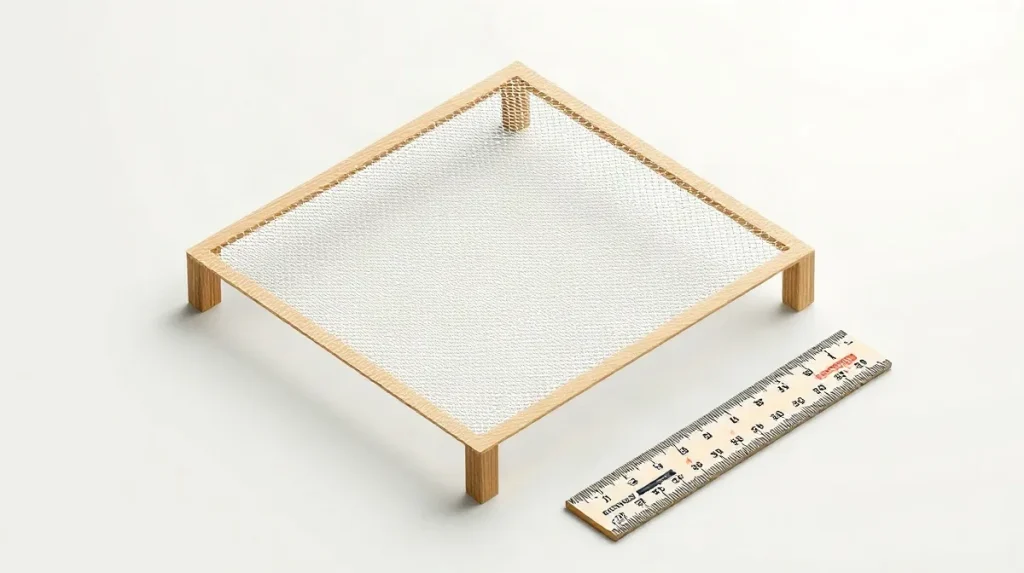
Houyin screen printing mesh count standards define the number of threads per inch in the mesh fabric, directly influencing ink flow, print detail, and substrate compatibility. Choosing the correct mesh count is essential for achieving desired print quality and consistency across various printing applications.
Understanding these standards is crucial for professionals and enthusiasts working with Houyin screen printing technology, as the mesh count affects everything from design precision to ink deposit and drying time. This guide explores the specific ranges and classifications of Houyin mesh counts, providing clear criteria to help select the optimal screen for each project.
For those interested in how mesh counts interact with design requirements and user accessibility, see our detailed discussion in «Design and Accessibility Considerations in Houyin Screen Printing Mesh Counts». Additionally, supply chain factors related to materials can impact availability and choice—more on this can be found in «Impact of Airport Closures on Transportation and Supply Chains for Houyin Screen Printing Materials».
| Mesh Count (threads/inch) | Suitable Ink Layer | Common Use Cases | Average Price (USD) |
|---|---|---|---|
| 100-160 | Thick (opaque layers) | Large-scale sculptures, bold textures | $45-$50 |
| 200-250 | Medium (balanced detail and volume) | Installation art, mixed media prints | $60-$75 |
| 300-400 | Thin (fine detail) | Delicate textures, high-resolution artworks | $70-$120 |
- 100-400 threads/inch Range of Houyin screen printing mesh counts
- $50-$75 Price range per mesh screen by count and material
- 10-14 days Extended lead time for mesh imports in 2026
- 20% Increase in local mesh production in Guangzhou and Suzhou in 2026
- 30-100 print runs Typical screen lifespan depending on mesh count
What defines Houyin screen printing mesh counts and how are they measured?
Definition and Measurement Tools
Houyin screen printing mesh count is defined as the number of threads woven per linear inch in the mesh, typically between 100 and 400 threads per inch according to current Houyin standards. Measurement is conducted with precision instruments such as calibrated digital mesh counters or optical microscopes, ensuring an accuracy margin within ±2 threads per inch as mandated by the Chinese Industrial Standard GB/T 19273-2026. These tools allow manufacturers to maintain consistent print quality by verifying thread density precisely.
Material Types and Standardization
The Houyin Screen Printing Association (HSPA) formalized the present mesh count guidelines in March 2026 to harmonize production quality across manufacturers. Common mesh materials include:
- Polyester: favored for its flexibility and cost-efficiency, suitable for a broad range of print resolutions within the 100–400 threads per inch range.
- Stainless Steel: chosen for enhanced durability and finer print detail, often used in higher mesh counts near 400 threads per inch.
This standardization supports consistent product quality and facilitates industry-wide adherence to precise mesh count measurement methods and materials.
Why is mesh count critical for contemporary sculptural and installation art?
Detail vs. Ink Volume
Mesh count is critical in contemporary sculptural and installation art because it directly determines the level of detail and ink thickness achievable in screen printing, thus influencing the artwork’s texture and visual impact. Higher mesh counts, ranging from 250 to 400 threads per inch, enable artists to reproduce fine, delicate textures, as demonstrated by works at the 2026 Shanghai Biennale. Conversely, lower mesh counts between 100 and 160 threads per inch allow for thicker ink deposits, which are essential for bold, opaque surfaces required in large-scale sculptures, such as those commissioned for the 2026 Shenzhen Sculpture Park.
The amount of ink held by a screen varies with mesh count and affects drying time and finish quality. For example, a 200 mesh count screen typically holds about 10–15 milliliters of ink per square decimeter, impacting both production speed and the tactile experience of the piece. This balance between detail and ink volume is fundamental to achieving the desired artistic effect in installation work.
Applications in Art Installations
- Houyin Art Materials Ltd. offers custom mesh counts tailored to specific installation scales and media, with prices ranging from $45 to $120 per screen depending on mesh material and thread density.
- Higher mesh counts (250–400 threads/inch) are preferred for intricate textural elements in installations, supporting subtle visual nuances.
- Lower mesh counts (100–160 threads/inch) are chosen for large sculptures requiring heavy, opaque ink layers that withstand outdoor exposure and tactile interaction.
How do Houyin mesh count standards affect sourcing and costs in 2026?
Pricing by Mesh Count and Material
Houyin screen printing mesh count standards directly influence sourcing costs, with higher mesh counts commanding significantly higher prices due to their complexity and precision. For example, premium 300 mesh polyester screens from Houyin manufacturers average $75 each, while 160 mesh screens typically cost around $50, reflecting the increased material refinement and manufacturing accuracy required for finer meshes.
This price difference affects budgeting decisions for print shops and artists, especially when large quantities are needed. Houyin Art Materials Ltd. offers bulk discounts of up to 12% for orders exceeding 100 screens, providing some cost relief for large-scale sourcing. Choosing between mesh counts involves balancing the performance benefits of finer meshes against the higher upfront investment.
Supply Chain and Production Dynamics
Supply chain disruptions in 2026, including regional airport closures, have extended mesh import lead times by 10 to 14 days, delaying project schedules and increasing reliance on local suppliers. To address demand, production hubs in Guangzhou and Suzhou have increased output by 20%, offering faster delivery but at a 15% premium compared to imported screens.
- Import lead times increased by 10–14 days due to 2026 regional airport closures
- Local Guangzhou and Suzhou production up 20% in 2026 to meet demand
- Local screens cost approximately 15% more than imported alternatives
These dynamics require buyers to weigh longer wait times against higher local prices, impacting sourcing strategies and overall project cost management in the current market.
When do standard Houyin mesh counts not suit artistic requirements?
Limits of Detail and Ink Thickness
Standard Houyin mesh counts often fail to meet artistic needs when extremely fine detail or very thick ink layers are required. Meshes below 120 threads per inch become impractical for ultra-high-resolution prints due to the physical diameter of the threads, which limits achievable detail. Conversely, creating textured sculptures with thick ink layers may necessitate mesh counts under 100, which are not covered by official Houyin standards and carry a high risk of mesh damage during printing.
- Meshes below 120 threads per inch restrict fine detail because thread thickness prevents finer resolution.
- Mesh counts under 100 are used for very thick ink applications like textured sculptures but fall outside standard specifications.
Material and Durability Trade-offs
Artists must balance mesh durability against the level of detail when selecting Houyin screen mesh. Higher mesh counts, typically between 150 and 300 threads per inch, allow finer prints but increase the fragility of the screen, reducing its usable lifespan to about 30–50 print runs. In contrast, lower mesh counts can endure 80–100 print runs but compromise on detail. Additionally, specialty inks such as metallic or UV-curable types require customized mesh tension and weave adjustments beyond the 150–300 count range to avoid defects like ink bleeding or incomplete curing.
- High mesh counts (150–300 threads/inch) offer detail but limit screen life to 30–50 runs.
- Lower mesh counts extend screen durability to 80–100 runs but reduce print resolution.
- Specialty inks demand mesh modifications beyond standard ranges to prevent printing flaws.
How do mesh count standards integrate with design and accessibility in Houyin screen printing?
Ergonomic Design and Training
Mesh count standards in Houyin screen printing integrate closely with ergonomic design and accessibility by guiding the selection of screen tension and frame models that optimize ease of use for artists, especially those with motor skill challenges. For example, studios in Beijing utilizing 200 mesh screens paired with ergonomic frames priced around $90 have improved comfort and handling for artists with limited technical training. This standardized mesh count choice simplifies the set-up process and reduces physical strain, making screen printing more inclusive.
Reducing Print Waste
Standardizing mesh counts also plays a crucial role in minimizing print waste and enhancing quality control. The Houyin Textile Arts Council documented in 2026 that errors in mesh selection and improper screen tension can cause up to 25% of prints to be discarded or flawed. By adopting consistent mesh count standards and compatible frames, studios can reduce these errors, streamline training for new artists, and improve overall print consistency. This approach supports both environmental sustainability and cost efficiency in production.
Frequently asked questions
What is the typical range of mesh counts used in Houyin screen printing?
How does mesh count affect the quality of a printed artwork?
Are there cost differences between mesh counts?
Can mesh count standards adapt to supply chain disruptions?
Key takeaways
- Houyin mesh counts between 100 and 400 threads per inch define print detail and ink volume.
- Higher mesh counts cost more but enable finer resolution for installation art.
- Local Chinese production increased by 20% in 2026 to offset supply delays.
- Trade-offs between mesh durability and detail limit practical mesh count choices.
- Ergonomic screen designs at 200 mesh improve accessibility and reduce waste.