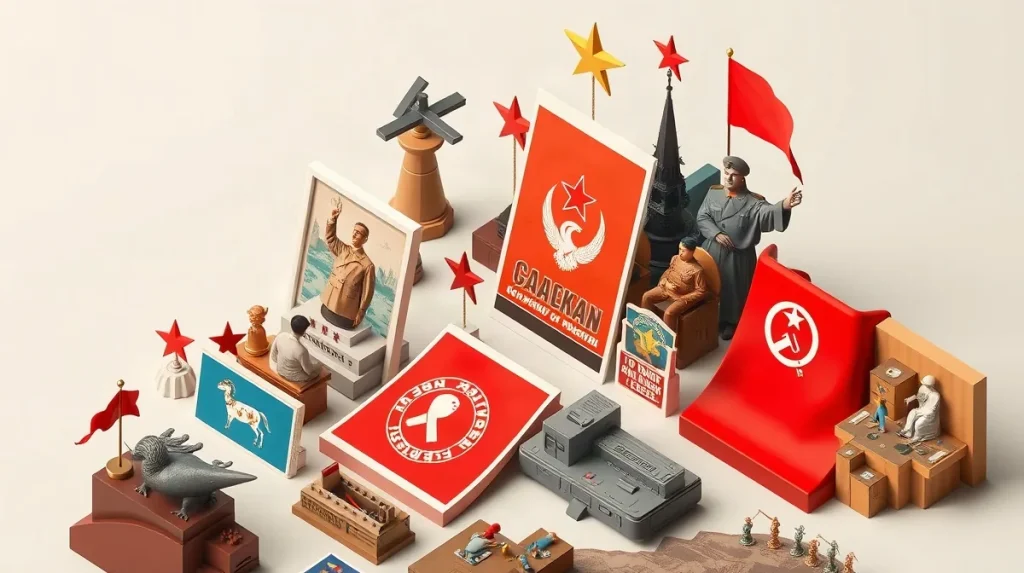
Understanding Sots Art requires diving into a unique artistic movement that emerged in the Soviet Union during the 1970s, where politics and creativity collided in striking ways. This genre combined the visual language of Socialist Realism—the official Soviet art style promoting communist ideals—with the ironic and critical sensibilities of Western pop art. The result was a bold, subversive commentary on Soviet propaganda and everyday life under state control.
At its core, Sots Art challenged the rigid narratives imposed by the Soviet regime by blending familiar ideological imagery with humor, satire, and ambiguity. Artists used this approach not only to question official messages but also to explore the tension between individual expression and collective ideology. Understanding Sots Art thus opens a window into how Soviet artists negotiated their complex social and political environment through innovative visual strategies.
| Aspect | Socialist Realism | Sots Art | Western Pop Art |
|---|---|---|---|
| Origin | State-mandated, official Soviet art | Unofficial, underground Soviet art | Commercial art from USA/UK |
| Themes | Glorification of socialist ideology | Irony and parody of socialist ideology | Consumer culture and mass media |
| Key Figures | Aleksandr Gerasimov, Isaak Brodsky | Komar and Melamid, Erik Bulatov | Andy Warhol, Roy Lichtenstein |
| Censorship | State-supported and enforced | Suppressed, underground | Commercially driven, no censorship |
| Visual Style | Realistic, heroic imagery | Juxtaposition of Soviet and Western icons | Bold colors, repetition, commercial imagery |
- 1964-1982 Period of Soviet 'Era of Stagnation' when Sots Art developed
- Early 1970s Decade when Sots Art was coined and emerged
- 2 Founding artists who coined 'Sots Art': Vitaly Komar and Alexander Melamid
What is Sots Art and when did it originate?
Historical Background
Sots Art originated in the early 1970s during the Soviet Union’s “Era of Stagnation,” a period spanning Leonid Brezhnev’s leadership from 1964 to 1982. This artistic movement emerged as a deliberate reaction against the state-imposed doctrine of socialist realism, which dominated Soviet art and demanded a strict portrayal of idealized communist values. Sots Art artists employed irony and parody to challenge and subvert the rigid propaganda that saturated public life. The movement gained momentum in Moscow and other Soviet cities, where unofficial art exhibitions quietly circulated despite government restrictions. By 1975, key works by Vitaly Komar and Alexander Melamid began to circulate, blending Soviet symbols with Western pop culture elements, which contrasted sharply with the sanctioned style. This fusion questioned the mass production of ideology and the mechanical repetition of heroic imagery mandated by state institutions such as the Union of Artists of the USSR.
Naming and Definition
The term “Sots Art” was coined by Vitaly Komar and Alexander Melamid in the early 1970s as a play on “Socialist Art,” highlighting its ironic stance toward socialist realism. It is also known under alternative names, including “Socialist Pop Art” and “Russian post-utopianism,” the latter coined by art critics to describe the movement’s critical reflection on Soviet ideals. Sots Art distinguished itself by merging visual language from both Soviet propaganda and Western consumer culture, often using recognizable Soviet imagery such as the hammer and sickle or Lenin’s portrait alongside commercial logos or pop art motifs. The movement’s hallmark was its deliberate use of parody and détournement to expose contradictions within state ideology.
- Era of Stagnation: 1964–1982 (Brezhnev leadership period)
- Key figures: Vitaly Komar and Alexander Melamid (coined term in early 1970s)
- Alternative names: Socialist Pop Art, Russian post-utopianism
- State art enforcement: Socialist realism mandated by the Union of Artists of the USSR
Who were the key figures in the Sots Art movement?
Founders
Vitaly Komar and Alexander Melamid were the primary founders of the Sots Art movement, pioneering its emergence in the early 1970s within the Soviet Union. Their collaborative works combined the visual language of socialist realism with Western pop culture motifs, creating a distinctive form of ironic critique against state propaganda. Their 1972 piece “Double Self-Portrait” exemplifies this approach, blending Soviet iconography with parody. Komar and Melamid’s efforts coincided with the Era of Stagnation under Leonid Brezhnev (1964–1982), a period characterized by rigid control over artistic expression. Their art challenged the monopolistic aesthetic standards by subverting official symbols and slogans, leveraging humor and pastiche to expose ideological contradictions. This foundational duo coined the term “Sots Art,” framing it as “Socialist Pop Art” and setting a conceptual framework that influenced numerous contemporaries.
Contributors
Beyond Komar and Melamid, the Sots Art movement included important contributions from artists such as Erik Bulatov, who used irony to critique socialist realism by integrating textual elements and landscapes that juxtaposed official slogans with ambiguous imagery. Additionally, artists from Soviet Georgia actively participated in the movement throughout the 1970s, reflecting regional variations of Sots Art that incorporated local cultural elements while maintaining the broader critical stance. Vyacheslav Akhunov, another notable figure, described Sots Art as witty and linked it to the idea of “Socialist Modernism,” a hybrid artistic narrative blending Western modernism with socialist aesthetics. This range of contributors expanded Sots Art’s reach across the USSR, demonstrating its capacity to question propaganda through diverse mediums and regional perspectives.
- Vitaly Komar and Alexander Melamid: founders, early 1970s, coined “Sots Art”
- Erik Bulatov: notable for ironic text-image juxtapositions, active in late 1970s
- Artists from Soviet Georgia: regional contributors in the 1970s
- Vyacheslav Akhunov: linked Sots Art to “Socialist Modernism,” late 1970s
- Era of Stagnation (1964–1982): political context for the movement’s emergence
How did Sots Art use imagery and irony to critique Soviet propaganda?
Visual Techniques
Sots Art employed a deliberate fusion of Soviet symbols and Western pop culture icons to undermine and parody official Soviet narratives. Vitaly Komar and Alexander Melamid, pioneers of the movement in the early 1970s, reworked mass-produced Soviet imagery—such as portraits of Lenin or Stalin and socialist realist propaganda posters—by overlaying or juxtaposing them with familiar Western consumer goods or advertising motifs. For example, Komar and Melamid’s 1972 piece “Double Self-Portrait” incorporated the style of American pop art while featuring Soviet iconography, highlighting the mass replication and commodification of ideology. This ironic layering exposed the mechanical and repetitive nature of propaganda during the Brezhnev Era (1964–1982), when the Soviet Union invested extensive resources, including roughly 1.5 billion rubles annually, in state-controlled media and visual culture to enforce ideological conformity.
Thematic Focus
The core thematic thrust of Sots Art was to critique how Socialist Realist art rigidly controlled Soviet national identity by propagating idealized, uniform images of the state and its citizens. The movement’s use of parody revealed how these images functioned as vehicles of mass ideological production rather than authentic individual expression. By reinterpreting symbols such as the hammer and sickle or heroic worker figures with humor and irony, Sots Art challenged the official narrative that art should serve the state’s political goals. This approach aligned with the broader cultural context of the 1970s Soviet Union, where approximately 90% of visual art was state-sanctioned under strict censorship laws, limiting artistic freedom. Thus, Sots Art not only questioned the content but also the mechanism of socialist propaganda’s pervasive influence on Soviet identity.
- Key artists: Vitaly Komar and Alexander Melamid, active from early 1970s onward
- State propaganda budget roughly 1.5 billion rubles per year during the Brezhnev Era
- About 90% of Soviet visual art was state-sanctioned under censorship laws in the 1970s
- Notable work: “Double Self-Portrait” (1972) blending Soviet imagery with Western pop art style
What were the limitations or challenges faced by Sots Art artists?
Censorship and Risk
The primary challenge faced by Sots Art artists was navigating the intense censorship imposed during the Brezhnev era, particularly from 1964 to 1982. The Soviet government tightly controlled artistic expression, enforcing the 1934 Union of Soviet Artists’ guidelines that mandated adherence to socialist realism. Public exhibitions of Sots Art works were rare and often prohibited, as their ironic and critical content was perceived as subversive. The use of state symbols and propaganda imagery placed artists at risk of surveillance by the KGB and potential professional bans. Many creators operated unofficially, exhibiting in underground venues or private apartments, which limited their audience reach to a few hundred individuals at most. This underground status not only restricted public exposure but also subjected artists such as Vitaly Komar and Alexander Melamid to threats of censorship or arrest, given that open critique of national identity and ideology was legally risky.
Economic and Institutional Barriers
Sots Art artists also faced significant economic and institutional obstacles stemming from the USSR’s ideological restrictions. Unlike officially sanctioned socialist realism, Sots Art had virtually no commercial viability within the Soviet art market, where state institutions controlled sales and commissions. Official galleries and museums rarely acquired Sots Art pieces, and prices for unofficial works were low, often under 100 Soviet rubles, a modest sum compared to the state-supported artists who earned several hundred rubles per commission. Without institutional support, artists depended on limited private patronage or smuggled their works abroad, where prices could reach thousands of dollars. This lack of official recognition forced many artists to remain in relative obscurity and constrained the distribution of their works. The absence of formal infrastructure meant that producing and promoting Sots Art required navigating a labyrinth of informal networks and risking exposure to state repression.
- 1934 Union of Soviet Artists guidelines: mandated socialist realism adherence
- Brezhnev era censorship period: 1964–1982
- Unofficial artwork price range inside USSR: often below 100 Soviet rubles
- Audience reach for underground exhibitions: typically under a few hundred people
How did Sots Art influence later art and culture beyond the Soviet Union?
International Impact
Sots Art significantly influenced global perceptions of Soviet unofficial art by gaining international recognition through exhibitions starting in the 1980s. Notably, the 1988 “Sots Art: Political Art in the Soviet Union” exhibition at the Institute of Contemporary Art in Boston introduced Western audiences to this movement’s ironic critique of socialist realism. This helped shift art market interest, with early Sots Art works by Vitaly Komar and Alexander Melamid selling for prices ranging from $10,000 to $50,000 in Western galleries by the mid-1990s. The international exposure also facilitated cultural exchanges, embedding Sots Art’s blending of political critique and pop culture into the broader postmodern art discourse outside the Soviet context.
Legacy
The legacy of Sots Art endures through its foundational role in shaping post-Soviet contemporary art and its ongoing dialogue about art as a form of social change since 1945. Artists like Komar and Melamid emigrated to the United States in the late 1970s and continued developing Sots Art themes, influencing global art with works that address political ideology using irony and parody. Contemporary exhibitions, such as the 2024 retrospective at the Garage Museum of Contemporary Art in Moscow, continue to highlight Sots Art’s impact on artists who blend mass media imagery with political commentary. This legacy persists in art practices that challenge official narratives and use cultural symbols as tools for critical engagement.
- 1988: First major international exhibition of Sots Art in Boston
- $10,000–$50,000: Early sale price range for Komar and Melamid’s works in Western galleries
- 1978: Komar and Melamid’s emigration to the United States
- 2024: Retrospective exhibition at Garage Museum of Contemporary Art
Frequently asked questions
What does 'Sots Art' mean?
Who coined the term 'Sots Art'?
Why was Sots Art considered a form of protest?
Did Sots Art have official support in the USSR?
How did Sots Art relate to Western pop art?
Key takeaways
- Sots Art originated in the 1970s Soviet 'Era of Stagnation' as ironic protest art
- Vitaly Komar and Alexander Melamid were central to defining Sots Art
- The movement combined Western pop culture with Soviet propaganda imagery
- Sots Art faced censorship and had to operate underground
- It influenced post-Soviet and international contemporary art
Sources
- Dodge Collection — “Unofficial Art in Soviet Georgia”
- dokumen.pub — “Art and Politics: A Small History of Art for Social Change Since 1945 9780755603947, 9781848851108 – DOKUMEN.PUB”
- uwyo.edu — “[PDF] Forbidden Art: – University of Wyoming”
- voicesoncentralasia.org — “ArtChaeology and the Destruction of Ideologies: An Interview with Vyacheslav Akhunov – Voices On Cental Asia”