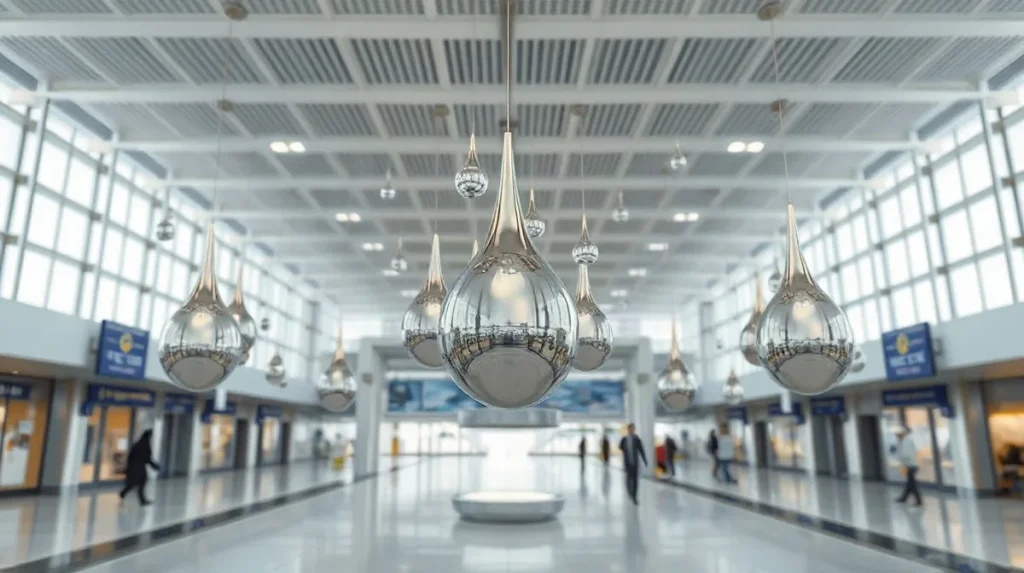
Kinetic Rain Sculpture contrasts dynamic movement with the static presence of Prada Marfa by exploring how motion and stillness coexist in sculptural form. While Prada Marfa stands as an immobile, site-specific art installation embodying permanence and cultural symbolism, kinetic sculptures introduce fluidity and transformation through continuous motion.
This interplay between moving and stationary art invites reflection on how physical change—or its absence—affects viewers’ perceptions of space and meaning. By examining the kinetic rain sculpture alongside Prada Marfa, we uncover a dialogue between ephemeral movement and lasting iconography that challenges traditional notions of sculpture as fixed and unchanging.
For a deeper understanding of Prada Marfa’s context, cultural resonance, and artistic impact, see our comprehensive exploration titled «Prada Marfa Sculpture: A Comprehensive Exploration of Its Art, Context, and Impact». This article further situates the contrasting qualities of kinetic and static sculpture within the broader landscape of contemporary art.
| Aspect | Kinetic Rain Sculpture | Prada Marfa Installation |
|---|---|---|
| Type of Movement | Kinetic, moving raindrops | Static, permanent structure |
| Materials | Copper-coated aluminum, steel cables | Painted plaster, wood, metal |
| Location | Singapore Changi Airport Terminal 1 | Marfa, Texas desert |
| Installation Year | 2012 | 2005 |
| Maintenance Needs | High, motors and cables serviced regularly | Low, minimal upkeep |
| Artistic Focus | Technological innovation and ephemerality | Consumer culture critique and permanence |
- 1,216 units Number of raindrops in Kinetic Rain
- 124 motors Number of motors controlling Kinetic Rain’s movements
- $3 million Approximate installation cost of Kinetic Rain in Singapore
- 15 minutes Duration of Kinetic Rain’s full movement cycle
- 2005 Year Prada Marfa was installed
What are the defining mechanical features of kinetic rain sculptures?
The defining mechanical features of kinetic rain sculptures include precisely controlled suspended elements moved by multiple motors via thin cables, enabling intricate, slow-motion choreography. Kinetic Rain by ART+COM employs 1,216 copper-coated aluminum raindrops, each suspended by 608 cables and orchestrated by 124 motors to create a continuous 15-minute movement cycle.
Materials and mechanics
- Raindrops: 1,216 units made of copper-coated aluminum for lightweight durability and reflective aesthetics.
- Cables: 608 thin cables support and guide the raindrops’ motion, providing delicate suspension and precise movement control.
- Motors: 124 individual motors coordinate the cables’ tension and position, enabling smooth, synchronized motion patterns.
- Movement cycle: The entire kinetic sequence repeats approximately every 15 minutes, showcasing complex, fluid choreography.
Installation specifics
Kinetic Rain was installed in 2012 at Singapore Changi Airport Terminal 1, representing a substantial investment of about $3 million. The sculpture’s engineering integrates seamlessly within the airport environment, balancing aesthetic impact with technical reliability in a high-traffic public space.
How does the movement in kinetic rain sculptures create a different viewer experience compared to Prada Marfa’s stillness?
Dynamic engagement versus static contemplation
Kinetic Rain sculptures create a viewer experience defined by continuous, fluid motion that captivates attention through slow transformations, unlike Prada Marfa’s fixed, unchanging presence which invites reflection on permanence and isolation. The kinetic installation’s movement lasts over approximately 15 minutes per cycle, simulating the natural rhythm of falling rain, engaging visitors repeatedly as shapes evolve and dissolve.
Kinetic Rain’s slow-moving droplets reflect and refract light dynamically, altering shadows and highlights every minute, which encourages viewers to linger and observe subtle changes. In contrast, Prada Marfa, installed in 2005 by Elmgreen & Dragset in the Texas desert, is a static artwork sized roughly 4 meters wide and 2 meters high, emphasizing permanence in an isolated environment. Its stillness evokes a meditative experience focused on endurance and cultural commentary rather than the temporal playfulness of kinetic art.
- Kinetic Rain: Movement cycle of approximately 15 minutes, fluid shapes simulate rainfall
- Kinetic Rain: Dynamic light and shadow changes every 60 seconds
- Prada Marfa: Permanent installation since 2005, dimensions approximately 4 x 2 meters
- Prada Marfa: Static presence emphasizing isolation and permanence in the Texas desert
What are the different artistic intentions behind kinetic rain sculptures and Prada Marfa?
Technological versus conceptual art
Kinetic Rain sculptures embody artistic intentions rooted in technological innovation and transient beauty, while Prada Marfa critiques consumerism and luxury branding through its static, site-specific installation. Kinetic Rain, consisting of 1,216 motorized raindrop-shaped elements controlled by computer software, showcases the precision of robotics and engineering to create fluid, ephemeral patterns that last mere minutes. In contrast, Prada Marfa, created in 2005 by Elmgreen & Dragset, is a permanent, immobile adobe structure resembling a Prada boutique, stocked with genuine Prada products priced around $1,500 each, intentionally placed far from urban centers to provoke reflection on the reach and absurdity of luxury commerce.
Context and audience
Kinetic Rain is designed for repeated engagement in a bustling space—the Changi Airport in Singapore, where it captivates over 65 million annual passengers, integrating art seamlessly into daily transit routines. Its dynamic movement invites viewers to pause and appreciate the fleeting nature of the display amid constant motion. Prada Marfa, situated along a remote Texas highway, targets a contemplative audience willing to travel specifically to experience its isolated permanence. This deliberate remoteness underscores themes of place and temporality, contrasting sharply with the airport’s temporally layered public environment.
- Kinetic Rain features 1,216 aluminum raindrops programmed for synchronized motion.
- Prada Marfa includes authentic Prada merchandise, each retailing near $1,500, displayed in a fixed adobe façade.
- Changi Airport serves approximately 65 million passengers annually, situating Kinetic Rain in a high-traffic cultural context.
- Prada Marfa’s location, approximately 26 miles from Marfa, Texas, emphasizes isolation and site specificity.
When do kinetic rain sculptures face limitations or challenges compared to static installations like Prada Marfa?
Maintenance and durability challenges
Kinetic Rain sculptures face significant limitations in maintenance and durability compared to static installations like Prada Marfa. The motors and cables powering Kinetic Rain require regular servicing to prevent malfunction, as downtime disrupts the intended dynamic experience. For example, the Singapore Changi Airport’s Kinetic Rain installation demands scheduled maintenance every few months to replace worn components, with motor units prone to failure after 10,000 operating hours. In contrast, Prada Marfa, a static outdoor sculpture installed in 2005 in Texas, endures harsh weather conditions with minimal upkeep, relying on durable materials designed to last decades without mechanical intervention.
Cost and accessibility
The high installation and operational costs of kinetic sculptures also restrict their replication and public accessibility. Kinetic Rain reportedly cost around $3 million to create and install, reflecting the complexity of its mechanical and electronic systems. Additionally, kinetic works depend on continuous power supply, making them vulnerable to outages or mechanical failure, which can interrupt the viewer’s experience. Prada Marfa’s static nature means it requires no electricity and minimal maintenance expenses, allowing it to remain accessible in a remote location with only periodic visits for minor conservation. These factors make static sculptures more feasible for widespread installation, especially in environments lacking infrastructure to support kinetic mechanisms.
- Kinetic Rain maintenance cycle: every few months for motor and cable servicing
- Kinetic Rain installation cost: approximately $3 million
- Prada Marfa installation year: 2005
- Prada Marfa low upkeep: no power required, minimal conservation visits
How much does the engineering complexity of kinetic rain add to its artistic value?
Technical sophistication
The engineering complexity of Kinetic Rain significantly enhances its artistic value by enabling a dynamic, precisely choreographed display that static sculptures cannot achieve. The installation’s 124 synchronized motors control 1,216 individual raindrops, each suspended and moved with millimeter accuracy. Advanced programming allows for over 1,000 distinct motion sequences, creating varied patterns and fluid transitions that require cutting-edge software and mechanical integration. The engineering components represent a substantial investment, accounting for a significant portion of the $3 million total budget, underscoring the technical ambition behind the artwork.
Impact on viewer immersion
The intricate engineering behind Kinetic Rain transforms it into a uniquely immersive, time-based experience that engages viewers beyond visual appreciation. The continuous, choreographed movement of thousands of elements in coordinated sequences draws attention to the interplay of motion and stillness, enhancing emotional and sensory impact. This kinetic complexity invites observers to witness changing forms and rhythms over several minutes, offering an experience unavailable in traditional static art, thus elevating both the conceptual and experiential dimensions of the sculpture.
Frequently asked questions
What materials are used in Kinetic Rain?
How long does the Kinetic Rain movement cycle last?
Where is Prada Marfa located and what is its significance?
Why do kinetic sculptures require more maintenance than static ones?
Key takeaways
- Kinetic Rain’s 1,216 moving raindrops contrast with Prada Marfa’s static storefront
- Movement in kinetic sculptures offers dynamic light and shadow not possible in still works
- Kinetic sculptures demand significant maintenance and higher costs than static installations
- Prada Marfa’s enduring stillness emphasizes conceptual themes of permanence and isolation
- Artistic intention differs: kinetic rain focuses on ephemeral beauty, Prada Marfa critiques consumer culture