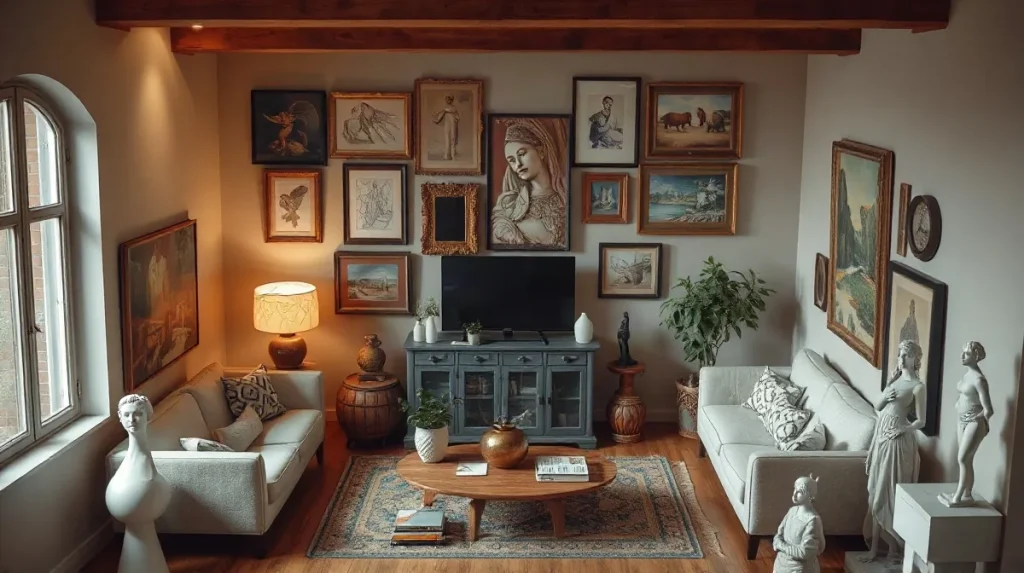
In 2026, the landscape of Eastern Europe’s apartment exhibitions has undergone a remarkable transformation, reflecting broader cultural shifts and the region’s dynamic artistic spirit. Once modest and localized events, these exhibitions now serve as vibrant platforms where contemporary creativity intersects with historical narratives, creating immersive experiences that captivate diverse audiences. This evolution highlights not only changes in artistic presentation but also the growing importance of private and intimate spaces as venues for art in Eastern Europe.
Today’s apartment exhibitions go beyond traditional gallery settings, embracing innovative curatorial approaches that emphasize personal storytelling and community engagement. The trend reveals a renewed appreciation for the apartment as both a physical and symbolic space, providing artists with a unique canvas to explore identity, memory, and social issues. As these exhibitions continue to evolve, they play a crucial role in shaping the region’s cultural dialogue and expanding the reach of Eastern European art on the global stage.
| Aspect | Underground Era (1980s-1990s) | Contemporary Era (2020s) |
|---|---|---|
| Venue | Private apartments, secretive | Curated apartments, semi-public |
| Audience Size | Under 20 attendees | Up to 50 attendees |
| Themes | Resistance, censorship avoidance | Feminism, social engagement |
| Funding | Informal, self-organized | $5,000–$15,000, grants and patronage |
| Institutional Support | None or hostile | Supported by institutions like TAEX |
- 50 visitors Typical maximum attendance at apartment exhibitions
- $5,000–$15,000 Common budget range for contemporary apartment exhibitions
- 2018 Year of the landmark “Working with Feminism” exhibition
- 2020 Approximate year institutions like TAEX began supporting apartment exhibitions
How did apartment exhibitions originate in Eastern Europe’s underground art scene?
Historical Context
Apartment exhibitions in Eastern Europe originated as a covert form of artistic expression during the 1980s and 1990s under authoritarian regimes in countries such as Poland and Russia. To evade state censorship and surveillance, artists hosted shows in private flats, limiting attendance to fewer than 20 people per event to maintain secrecy. For example, Moscow-based conceptual artists frequently gathered in intimate studio spaces, circumventing official galleries that enforced restrictions. These underground exhibitions allowed artists to present politically and socially charged works that would have been banned in public institutions, effectively turning domestic spaces into venues for resistance and creative autonomy.
Community Networks
The organization of early apartment exhibitions relied heavily on informal community networks and word-of-mouth communication rather than formal institutions. Artists and curators formed loose collectives that exchanged invitations discreetly, often through handwritten notes or personal contacts, ensuring that only trusted individuals attended. This grassroots approach helped sustain the movement despite the risks, with events sometimes lasting only a few hours to reduce exposure. Notable networks included small groups linked to Moscow’s conceptual art scene, where cooperation and mutual support were essential for survival within the restrictive cultural landscape.
- Attendance threshold: fewer than 20 people per exhibition
- Time period: 1980s and 1990s
- Key location: private apartments in Moscow and Warsaw
- Organizational method: word-of-mouth and informal community groups
What are the key milestones marking the transition to contemporary curated apartment exhibitions?
Feminist Themes
The transition to contemporary curated apartment exhibitions in Eastern Europe is marked by the integration of feminist discourse as a central curatorial theme, exemplified by the groundbreaking 2018 exhibition “Working with Feminism” curated by Katrin Kivimaa. This exhibition showcased over 30 artists from the region, highlighting gender politics and feminist narratives within private domestic spaces. Its success demonstrated how apartment venues could move beyond informal gatherings to become intentional platforms for critical dialogue. The exhibition’s scale and thematic coherence set a new standard, influencing subsequent shows to embrace socially relevant content while leveraging the intimacy of apartment settings.
Institutional Support
Since 2020, the legitimization of apartment exhibitions has accelerated through institutional backing, notably by entities such as the Tallinn Art Exhibition (TAEX). TAEX’s involvement has provided formal frameworks and logistical support, enabling exhibitions like the 2022 “Urban Legends” in Budapest to incorporate interactive and socially engaged art forms within converted residential spaces. Additionally, digital documentation platforms have expanded audience reach beyond local confines, allowing these ephemeral exhibitions to gain wider recognition. The evolution also includes practical benchmarks, such as TAEX’s funding guidelines requiring a minimum exhibition duration of 14 days and curatorial budgets often ranging between $10,000 and $30,000.
- 2018: “Working with Feminism” featuring 30+ artists
- 2020: Institutional support begins with TAEX
- 2022: “Urban Legends” integrates interactive art in Budapest apartments
- Exhibition duration threshold: 14 days minimum (TAEX standards)
- Curatorial budgets: $10,000–$30,000 range
Which contemporary artists and curators are shaping apartment exhibitions in 2026?
Leading Curators
In 2026, Dr. Margarita Kuleva stands out as a pivotal figure shaping apartment exhibitions across Eastern Europe. As Senior Curator at the Tallinn Art Exhibition Center (TAEX), Kuleva has curated multiple shows that fuse sociological inquiry with artistic practice, particularly highlighting labor inequalities in the cultural sector. Her exhibitions typically operate on budgets ranging from $8,000 to $12,000, enabling the integration of documentary materials and participatory elements within confined residential spaces. Meanwhile, Katrin Kivimaa remains an influential editorial voice in feminist curating, her writings continuing to inform curatorial strategies and thematic frameworks that emphasize gender politics and social justice within apartment exhibition circuits.
Noteworthy Artists
Artists like Sokol have been instrumental in introducing documentary video art involving migrant workers to apartment exhibitions since 2018, continuing to innovate in 2026 by incorporating multimedia installations that blend personal narratives with broader socio-political contexts. Contemporary emerging artists now often deploy multimedia setups with production costs typically between $5,000 and $15,000 per exhibition, reflecting a trend toward technologically sophisticated, immersive experiences in intimate settings. These artists leverage the apartment format to create socially engaged art that challenges traditional gallery norms, fostering direct audience interaction and critical discourse within everyday living environments.
- Exhibition budgets for multimedia installations: $5,000–$15,000
- Dr. Margarita Kuleva’s curated shows typically cost: $8,000–$12,000
- Since 2018, Sokol’s focus includes documentary video art with migrant workers
- Katrin Kivimaa’s editorial work shapes feminist curating themes across Eastern Europe
How do apartment exhibitions address feminist and social themes uniquely?
Audience Engagement
Apartment exhibitions in Eastern Europe uniquely address feminist and social themes by fostering intimate, interactive environments that allow for direct dialogue on gender, labor, and resistance issues often absent in conventional galleries. For example, the “Working with Feminism” exhibition held in Kyiv in spring 2026 incorporated participatory workshops attracting over 300 attendees, with ticket prices ranging from 500 to 1,200 Ukrainian hryvnias. These workshops and panel discussions created spaces where artists, activists, and visitors engaged in real-time debates, breaking down hierarchical barriers typical of formal art institutions. The apartment setting, usually accommodating fewer than 50 people per session, encourages sustained conversations and personal exchanges, which amplify marginalized voices and bring invisible cultural labor to the forefront.
Social Activism
Socially engaged art practices within apartment exhibitions often involve collaborations with local activist networks and migrant communities, broadening the scope of feminist and social discourse. The 2026 “Urban Legends” exhibition in Warsaw partnered with two migrant advocacy groups, providing platforms for storytelling that highlighted labor precarity and gendered migration experiences. These exhibitions emphasize the recognition of cultural work traditionally overlooked—such as caregiving and domestic labor—by integrating these narratives into their curation. Artists and curators frequently allocate 20-30% of exhibition budgets, typically between €3,000 and €7,000, to support community-based projects, signaling a commitment to sustained social practice beyond the gallery’s walls.
- “Working with Feminism”: workshops with 300+ participants, ticket prices 500–1,200 UAH
- Apartment capacity: under 50 attendees per session for intimate dialogue
- “Urban Legends” collaboration: migrant advocacy groups involved in narrative curation
- Budget allocation for community projects: 20–30%, approximately €3,000–€7,000
What are the limitations and challenges of apartment exhibitions in Eastern Europe?
Physical Space Restrictions
Apartment exhibitions in Eastern Europe face significant limitations due to physical space constraints, which typically restrict visitor numbers to fewer than 50 per event. Most venues are residential flats averaging around 50 to 70 square meters, making it difficult to accommodate larger audiences without compromising the viewing experience or safety. This limitation directly impacts the financial sustainability of these exhibitions, as ticket sales and in-person attendance remain capped. Although digital documentation and virtual tours are increasingly employed to extend outreach beyond the physical confines, platforms like Matterport 3D scanning or Artsteps virtual galleries cannot fully replicate the immersive and intimate atmosphere that characterizes these shows.
Funding and Legal Issues
Artists organizing apartment exhibitions often grapple with funding shortages, with typical project budgets rarely exceeding $15,000. These budgets mostly depend on grants from cultural institutions such as the Eastern Europe Arts Fund or private patronage, limiting the scale and duration of exhibitions. Additionally, regulatory challenges complicate the consistent use of residential spaces for public events. Compliance with local safety codes, including fire safety regulations under the 2018 Russian Federal Law No. 123-FZ and zoning laws in cities like Warsaw and Prague, requires permits that are often difficult to obtain. These legal hurdles increase administrative burdens and can restrict the frequency and scope of apartment exhibitions.
- Visitor capacity: typically under 50 people
- Average exhibition flat size: 50–70 m²
- Typical budget ceiling: $15,000 per exhibition
- Relevant regulation example: Russian Federal Law No. 123-FZ (2018) on fire safety
- Popular digital tools for outreach: Matterport 3D scanning, Artsteps virtual galleries
Frequently asked questions
What defines an apartment exhibition compared to traditional galleries?
How have feminist themes influenced Eastern European apartment exhibitions?
Are apartment exhibitions officially recognized by art institutions?
What challenges do curators face organizing apartment exhibitions?
Key takeaways
- Apartment exhibitions evolved from secretive 1980s underground shows to supported contemporary spaces by 2026
- Key shows like “Working with Feminism” and “Urban Legends” highlight feminist and social engagement
- Curators such as Dr. Margarita Kuleva and Katrin Kivimaa lead the scene with focus on labor and gender issues
- Physical and legal constraints limit visitor capacity and funding, challenging sustainability
- Digital documentation expands reach but cannot replace the intimate experience of in-person apartment exhibitions
Sources
- academia.edu — “Curating Differently: Feminisms, Exhibitions, and Curatorial Spaces”
- academia.edu — “Working with Feminism: Curating and Exhibitions in Eastern Europe”
- newuniversityinexileconsortium.org — “Bodies and Spaces of Resistance: The Untold Social History of and Lessons from Contemporary Art in Eastern Europe – The New University in Exile ConsortiumThe Ne”
- excours.io — “Notes from the Underground. Art and Alternative Music in Eastern”
- artweekma.org — “Contemporary Art in Europe: Exhibitions Worth the Wait”
Topic guide: Exhibitions: The Complete Guide